
- Government of Montenegro
DPM Ivanović participates in the 10th Rectors’ For...
DPM Ivanović participates in the 10th Rectors’ Forum of Southeast Europe and Western Balkans: The vital role of universities in EU accession

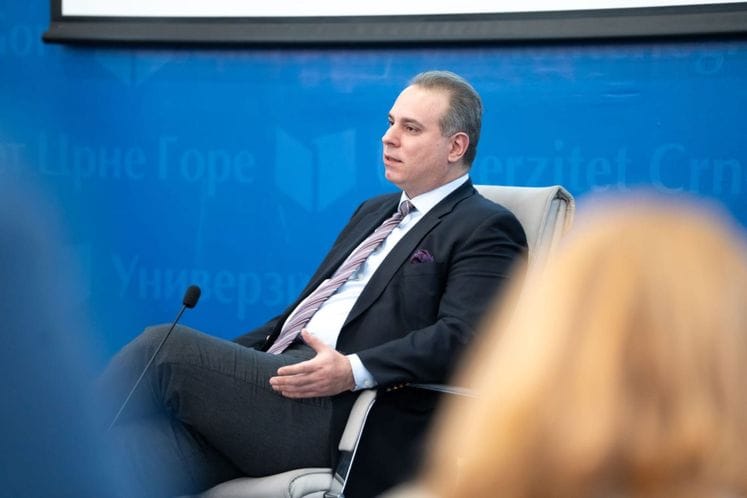
Deputy Prime Minister Filip Ivanović participated in the Ulysseus International Networking Conference, held on the second day of the 10th Rectors’ Forum of Southeast Europe and Western Balkans, jointly organized by the University of Montenegro and the Rectors’ Forum of Southeast Europe and Western Balkans.
Speaking on the panel “The Role of Universities in the EU Accession Process,” Deputy Prime Minister Ivanović highlighted the crucial role that universities play not only in wider social processes but also in the European integrations process. He emphasized that the education and expertise provided by universities are of essential importance, as they are the institutions where the future experts leading the EU accession process are educated.
Universities are where the professionals leading the EU accession process and negotiations with the European Union are trained. The expertise that universities provide to our professionals will become even more significant in the coming period, once Montenegro achieves its goal and becomes an EU member state. At that point, our experts will work not only in Montenegro but also within EU institutions, Ivanović stated.
He also underscored the importance of cooperation in the fields of science and education as a strong foundation for enhancing regional relations. Montenegro strongly supports regional cooperation, which is also a key prerequisite for successful EU accession. He further emphasized the value of participation in various regional initiatives of which Montenegro is an active member.
Deputy Prime Minister Ivanović pointed out that inter-university cooperation within the region presents an exceptional opportunity for knowledge exchange, improved research outcomes, and more efficient use of EU funding available for science and innovation. He noted that investing in the advancement of the education and research system contributes to reducing brain drain, while also creating an environment in which the Montenegrin scientific diaspora—spread across the globe—might be motivated to collaborate with domestic institutions, and in some cases, even return to contribute to the country’s development.
In conclusion, Deputy Prime Minister Ivanović stressed that strong regional and international cooperation in the fields of science and education will form the foundation upon which Montenegro will build its future as a full member of the European Union.
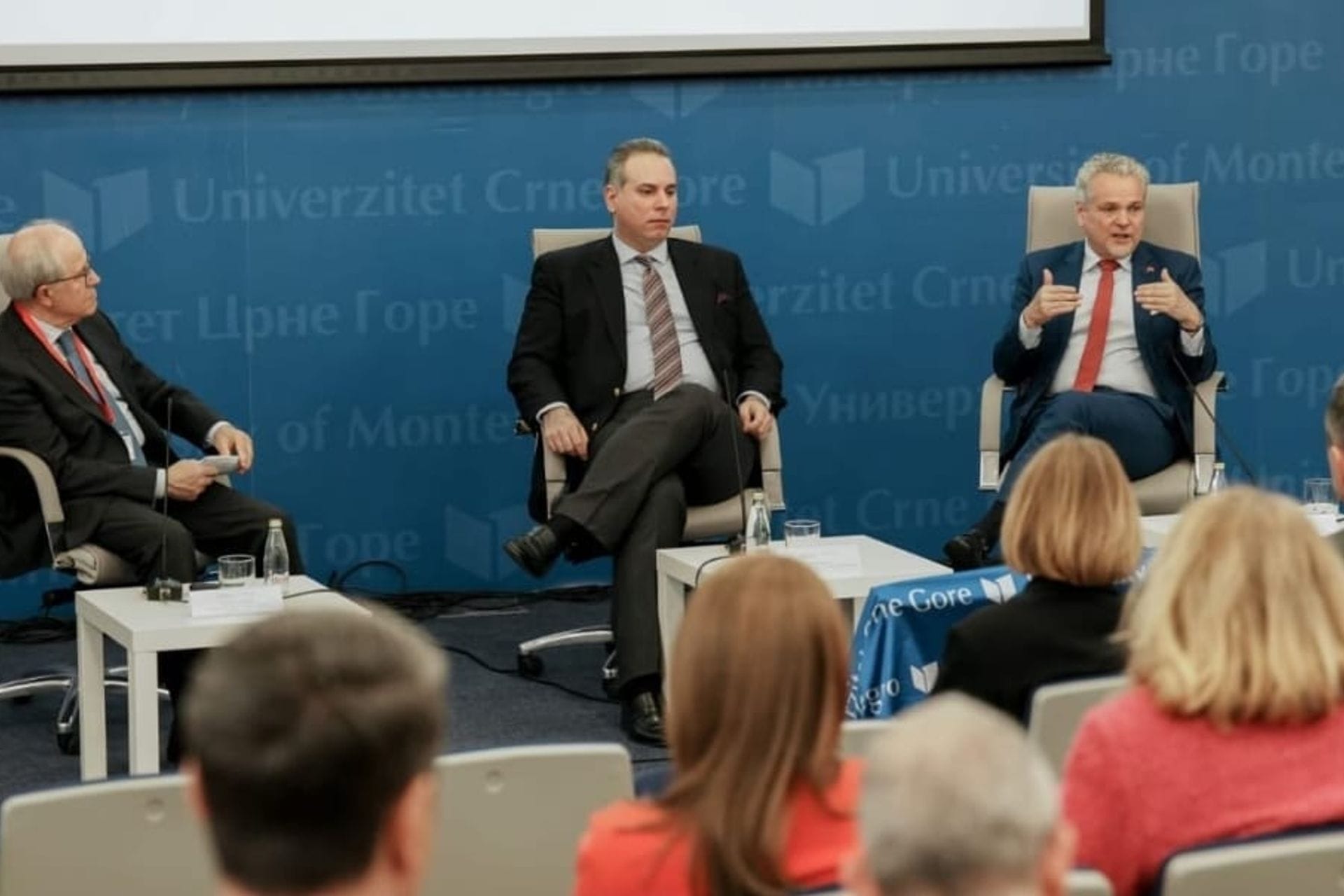 PHOTO: PR Centar/UCG